
Welcome to the future of content creation. If you’ve ever felt overwhelmed by the complex timelines, keyframes, and color wheels of traditional video editing software, you are not alone. In 2026, the barrier to entry has officially vanished. Thanks to the rapid evolution of artificial intelligence, which helps simplify video editing, anyone with a story to tell can produce studio-quality content in minutes, not days.
This guide is designed specifically for those who are just starting. We will explore how to use AI tools for video editing beginners, focusing on beginner-friendly tools and breaking down the complex jargon into actionable steps. By the end of this article, you will understand how to leverage machine learning to automate the “boring” parts of editing, allowing your creativity to take center stage.
Why AI Video Editing is a Game Changer in 2026
The landscape of digital media has shifted. In previous years, video editing required high-end hardware and years of specialized training. Today, generative AI and neural networks have democratized the AI-powered editing process. This democratization makes it easier than ever to learn how to use ai tools for video editing beginners.
According to recent industry data, over 85% of content creators now use at least one AI-powered tool in their content creation workflow. The reason is simple: efficiency. Understanding how to use ai tools for video editing beginners means leveraging this efficiency to streamline the editing process to your advantage. AI doesn’t just make editing faster; it makes it smarter. Whether you are a YouTuber, a small business owner, or a social media enthusiast, AI tools allow you to:
Automate repetitive tasks like cutting out “ums” and “ahs.”
Generate high-quality b-roll without a camera.
Enhance low-quality footage to 4K or 8K resolution instantly.
Translate and dub videos into multiple languages with perfect lip-syncing.
Section 1: Understanding the Different Types of AI Video Tools
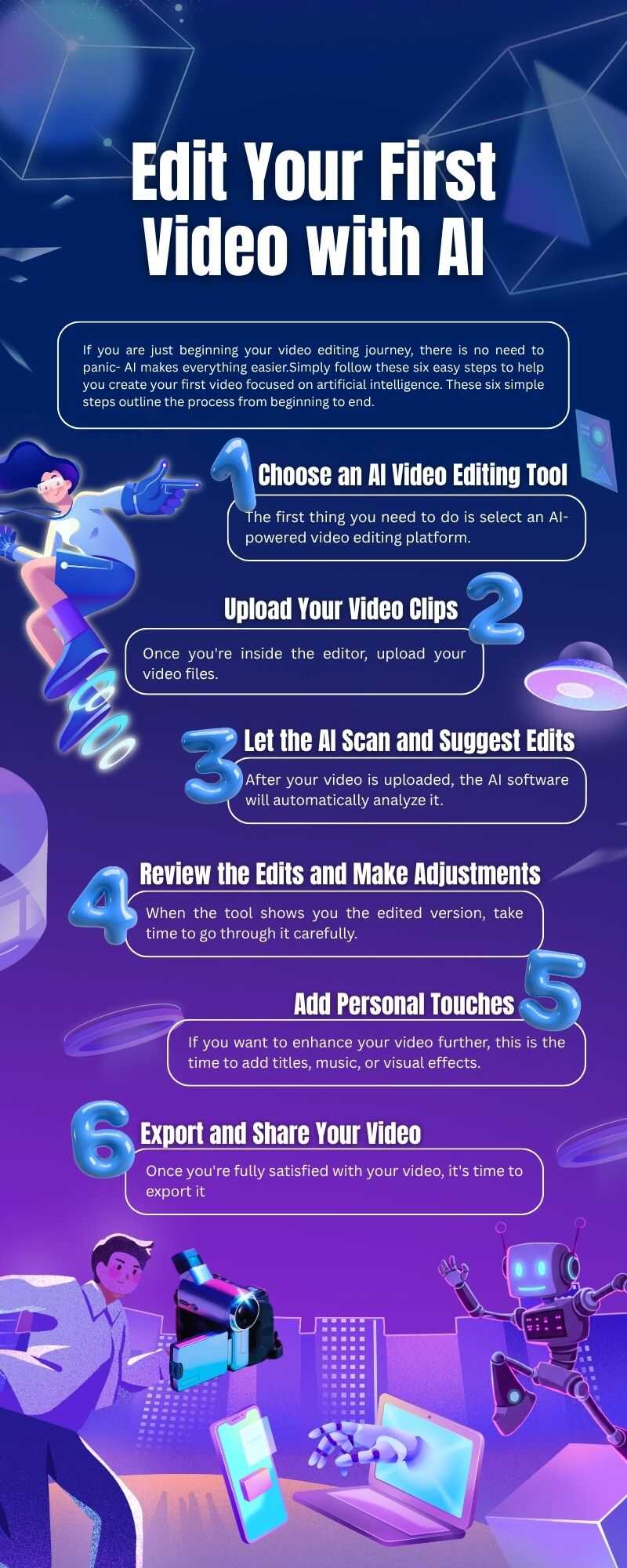
Before diving into the “how-to,” it is essential to understand what tools are available. This understanding is crucial for anyone learning how to use ai tools for video editing beginners, especially when looking for easy video editing solutions. Not all AI video tools are created equal. In 2026, we generally categorize them into three main types:
1. AI-Assisted Editors
These are traditional editing suites (like Adobe Premiere Pro or DaVinci Resolve) that have integrated AI plugins. These tools help with specific tasks like auto-reframing for vertical video, object removal, and intelligent color grading. They offer a gentle introduction to how to use ai tools for video editing beginners by enhancing familiar workflows within the post-production process.
2. Text-Based Video Editors
This is perhaps the most beginner-friendly category. Tools like Descript allow you to edit video by editing a text transcript. If you delete a word in the script, the corresponding video clip is automatically removed. It is as simple as editing a Word document. For those wondering how to use ai tools for video editing beginners, text-based editors provide an incredibly intuitive starting point with their user-friendly interface.
3. Generative AI Video Platforms
These platforms, such as Runway, Pika, and Sora, allow you to create video from scratch using text prompts. You type “a futuristic city at sunset,” and the AI generates the footage for you, enabling a form of automated video production. This is perfect for beginners who don’t have their own recorded clips. Exploring these platforms is a key part of learning how to use ai tools for video editing beginners.
Section 2: Step-by-Step Guide: How to Edit Your First Video with AI
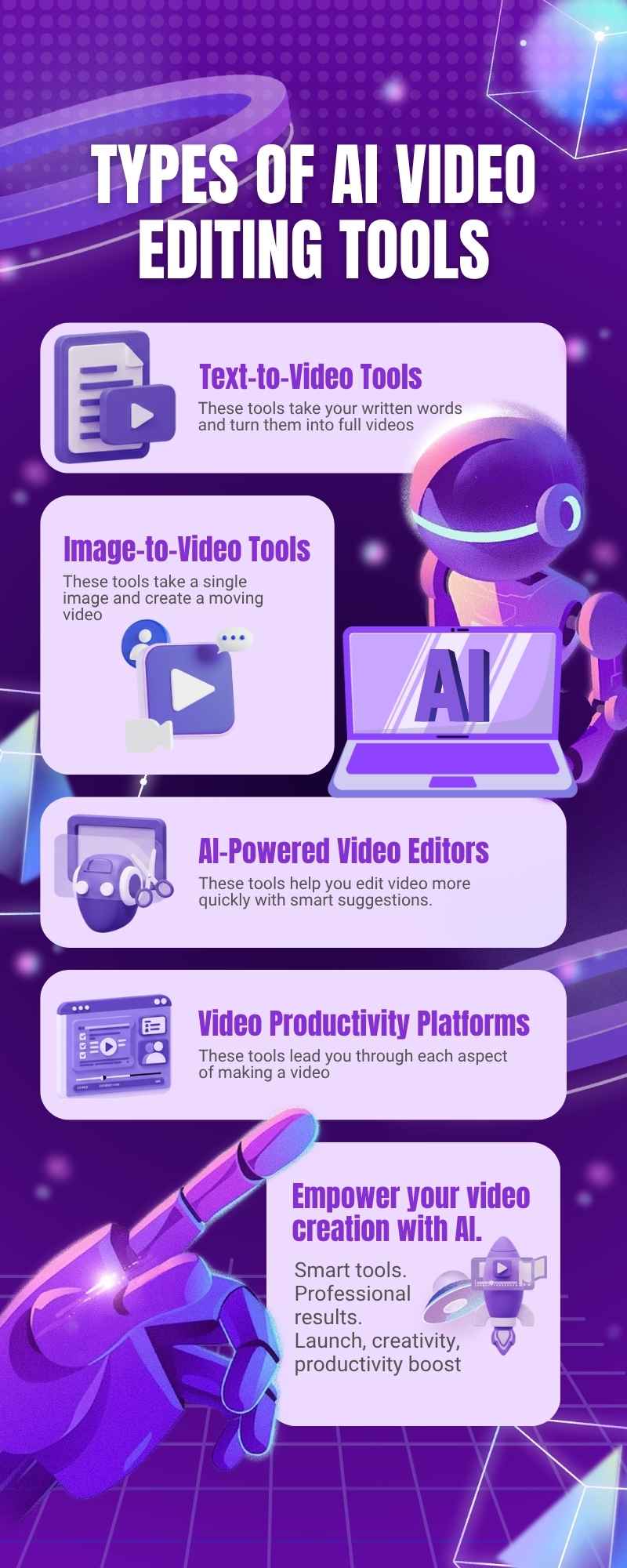
Ready to start? Follow these seven simple steps to create your first professional video using AI tools. This guide will walk you through how to use ai tools for video editing beginners to achieve professional results.
Step 1: Scripting and Storyboarding with AI
Every great video starts with a plan. Use AI writing assistants like ChatGPT or Claude to generate a script. In 2026, these tools can even suggest visual cues and camera angles based on the tone of your message. This initial planning is vital when learning how to use ai tools for video editing beginners.
Step 2: Choose Your Primary AI Editor
For beginners, I highly recommend starting with a browser-based tool like CapCut AI or InVideo AI. These platforms offer “one-click” solutions for most editing needs and are considered beginner-friendly tools. They are intuitive and don’t require a powerful computer since the heavy lifting happens in the cloud. Choosing the right platform is a crucial step in understanding how to use ai tools for video editing beginners.
Step 3: Upload and Automated Transcription
Upload your raw footage. The first thing the AI will do is transcribe your audio. This allows you to see exactly what was said. You can then use the “Remove Filler Words” feature to instantly delete every “uh,” “um,” and long silence from your video. This automation simplifies a key aspect of the post-production process for how to use ai tools for video editing beginners.
Step 4: AI-Powered B-Roll Integration
One of the hardest parts of editing is finding footage to cover your cuts. In 2026, AI tools can analyze your script and automatically insert relevant stock footage or generate AI-rendered clips that match your topic perfectly. This ensures your video remains visually engaging. Mastering this feature is a significant part of learning how to use ai tools for video editing beginners.
Step 5: Audio Enhancement and Music
Bad audio kills good video. Use AI Voice Enhancers to remove background noise and make a cheap microphone sound like a professional studio setup. Additionally, use AI music generators to create royalty-free tracks that perfectly match the length and emotional arc of your video. Effective audio enhancement, part of broader video enhancement features, is a powerful benefit of knowing how to use ai tools for video editing beginners.
Step 6: Visual Effects and Color Grading
You no longer need to understand “color science.” Simply click on “AI Color Match,” and the software will ensure all your clips have a consistent, cinematic look. If you want to change the background, use AI Green Screen to remove the backdrop without needing an actual green screen. These visual enhancements, along with other video enhancement features, demonstrate the power of how to use ai tools for video editing beginners.
Step 7: Export and Multi-Platform Optimization
Once you are happy with the edit, use the AI Export feature. The tool will automatically create different versions of your video: a 16:9 version for YouTube, a 9:16 version for TikTok, and a 1:1 version for Instagram, ensuring your content looks perfect on every screen. Optimizing for multiple platforms is a final, crucial step in learning how to use ai tools for video editing beginners.
Section 3: Top AI Video Editing Tools for Beginners in 2026
To help you choose, here is a breakdown of the best tools currently dominating the market for beginners, focusing on beginner-friendly tools: This section will guide you in selecting the best platforms for how to use ai tools for video editing beginners.
Descript: The king of text-based editing. Best for podcasts and talking-head videos.
CapCut (Desktop & Mobile): The most versatile tool for social media creators. Its AI “Auto-Cut” and “Auto-Caption” features are world-class, offering a user-friendly interface for quick edits.
Runway Gen-3: Best for those who want to experiment with generative video and high-end visual effects.
Adobe Premiere Pro (with Firefly AI): Best for beginners who plan to go professional. The AI features simplify complex tasks like “Generative Fill” for video, making AI-powered editing more accessible.
Lumen5: Ideal for businesses that want to turn blog posts into videos automatically.
Section 4: Advanced AI Features to Explore
As you become more comfortable, you can start exploring the “magic” features that were once impossible for beginners: These advanced capabilities further enhance your understanding of how to use ai tools for video editing beginners.
AI Voice Cloning
If you made a mistake in your recording, you don’t need to re-record. Use AI Voice Cloning (like ElevenLabs) to type the corrected sentence. The AI will generate the audio in your exact voice, and you can “patch” it into the video.
Multimodal AI Search
Searching through hours of footage for “that one clip where I smiled” used to take forever. In 2026, you can simply type “find clips of me smiling” into your editor’s search bar, and the computer vision AI will find it instantly.
Generative Extend
Did your clip end a second too early? Generative Extend uses AI to “imagine” and create new frames at the end of a clip, smoothly extending the footage so you have more room for transitions.
Section 5: Common Mistakes and How to Avoid Them
Even with the help of AI, beginners can fall into certain traps. Here is how to keep your videos looking professional: Avoiding these pitfalls is crucial when learning how to use ai tools for video editing beginners.
- Over-Reliance on AI: Don’t let the AI do everything*. Your unique perspective and “human touch” are what make your content relatable. Use AI to assist, not to replace your creativity.
- Ignoring the Pace: Sometimes AI-automated cuts can feel too fast or robotic. Always watch your video through and manually adjust the timing to ensure it feels natural.
- Low-Quality Prompts: When using generative AI, the quality of the output depends on the quality of your prompt. Be specific. Instead of “a dog,” try “a golden retriever running through a field of daisies in cinematic lighting.”
- Copyright Awareness: While most AI tools in 2026 provide “clean” assets, always double-check the licensing of AI-generated music and images to ensure they are safe for commercial use.
The Ethics of AI Video Editing in 2026
As a beginner, it is important to be aware of the ethical landscape. In 2026, transparency is key. Many platforms now require you to “tag” videos that contain significant AI-generated content or deepfakes.
Always use these tools responsibly. AI is a superpower for storytelling, but it should never be used to spread misinformation or create non-consensual content. Ethical considerations are an integral part of understanding how to use ai tools for video editing beginners responsibly. Authenticity remains the most valuable currency in the digital age.
Conclusion: Your Journey Starts Now
Learning how to use AI tools for video editing beginners is no longer a daunting task. In 2026, the technology has reached a point where the only limit is your imagination. By automating the technical hurdles, AI allows you to focus on what truly matters: your message and your story, effectively enabling automated video production.
Start small. Pick one tool, like CapCut or Descript, and experiment with a 60-second video. You will be amazed at how quickly you can produce content, enabling quick video creation that looks like it was made by a professional production house. The era of the “solo creator” has never been brighter.
Are you ready to create? Dive in, experiment, and let AI be the co-pilot in your creative journey.