
The digital landscape has shifted dramatically. If you are still wondering how to earn money using AI tools for content creation, you are standing at the threshold of a massive professional transformation. In 2026, Artificial Intelligence, powered by sophisticated AI content generation tools, is no longer just a “futuristic concept”—it is the engine powering the most profitable side hustles and full-scale digital agencies worldwide.
Whether you are a freelance writer, a social media manager, or an aspiring entrepreneur, AI tools have lowered the barrier to entry while simultaneously raising the ceiling for potential income. By leveraging these technologies for efficient content automation, you can now produce high-quality output in a fraction of the time it took just a few years ago.
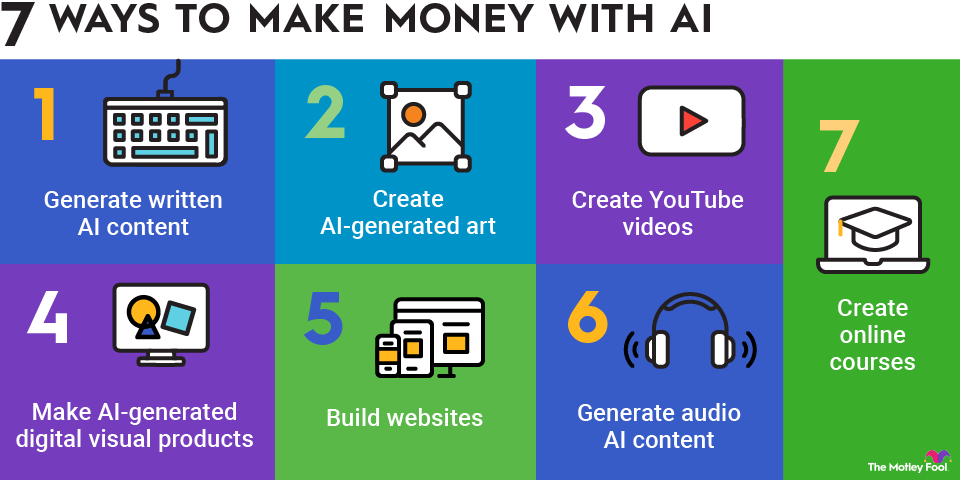
Why 2026 is the Golden Age for AI-Driven Content
In 2026, the market is saturated with content, but it is starved for quality and authenticity. The secret to earning money isn’t just about using AI to “churn out” text; it is about using AI to scale your creative expertise. Professionals who master the art of “human-in-the-loop” content creation—where AI handles the heavy lifting and humans add the strategic polish—are currently seeing income streams ranging from $300 to $10,000+ per month.
The demand for specialized AI services is skyrocketing. Businesses are desperate for professionals who can navigate AI tools to produce SEO-optimized blogs, engaging video scripts, and high-converting ad copy, implementing advanced SEO optimization strategies. If you position yourself as an AI-powered content consultant, you are not just a freelancer; you are a business efficiency partner.
1. Mastering AI-Powered Freelance Copywriting
Freelance writing has evolved into a sophisticated blend of advanced prompt engineering skills and brand strategy. Clients no longer want just “words on a page”; they want content that ranks on search engines and drives conversions.
The Strategy: Use advanced Large Language Models (LLMs) to generate detailed outlines, conduct deep research, and draft initial versions of long-form articles.
The Monetization: Charge based on value-based pricing rather than a per-word rate. Since AI helps you complete a 2,000-word article in two hours instead of eight, your hourly rate effectively quadruples.
Pro Tip: Always use AI to generate the “SEO skeleton” (headers, meta descriptions, and semantic keyword clusters) before you begin writing. This ensures your content strategy development is optimized for 2026 search intent algorithms from the very first draft.
2. Building a Faceless YouTube or TikTok Empire
Video content remains the most lucrative form of digital media. However, many creators are intimidated by the prospect of being on camera. Enter the era of faceless content creation.
The AI Stack: Use AI script generators for your narrative, text-to-speech tools for high-quality voiceovers, and AI-powered video editors to automatically sync footage with your audio.
The Revenue Model: Beyond standard ad revenue (AdSense), you can earn through affiliate marketing or by creating sponsored content for brands that need high-quality video ads but lack the budget for a full production crew.
Efficiency: Tools like automated video clipping allow you to turn a single long-form podcast or webinar into 10–15 short-form clips, drastically increasing your reach and potential for brand deals.
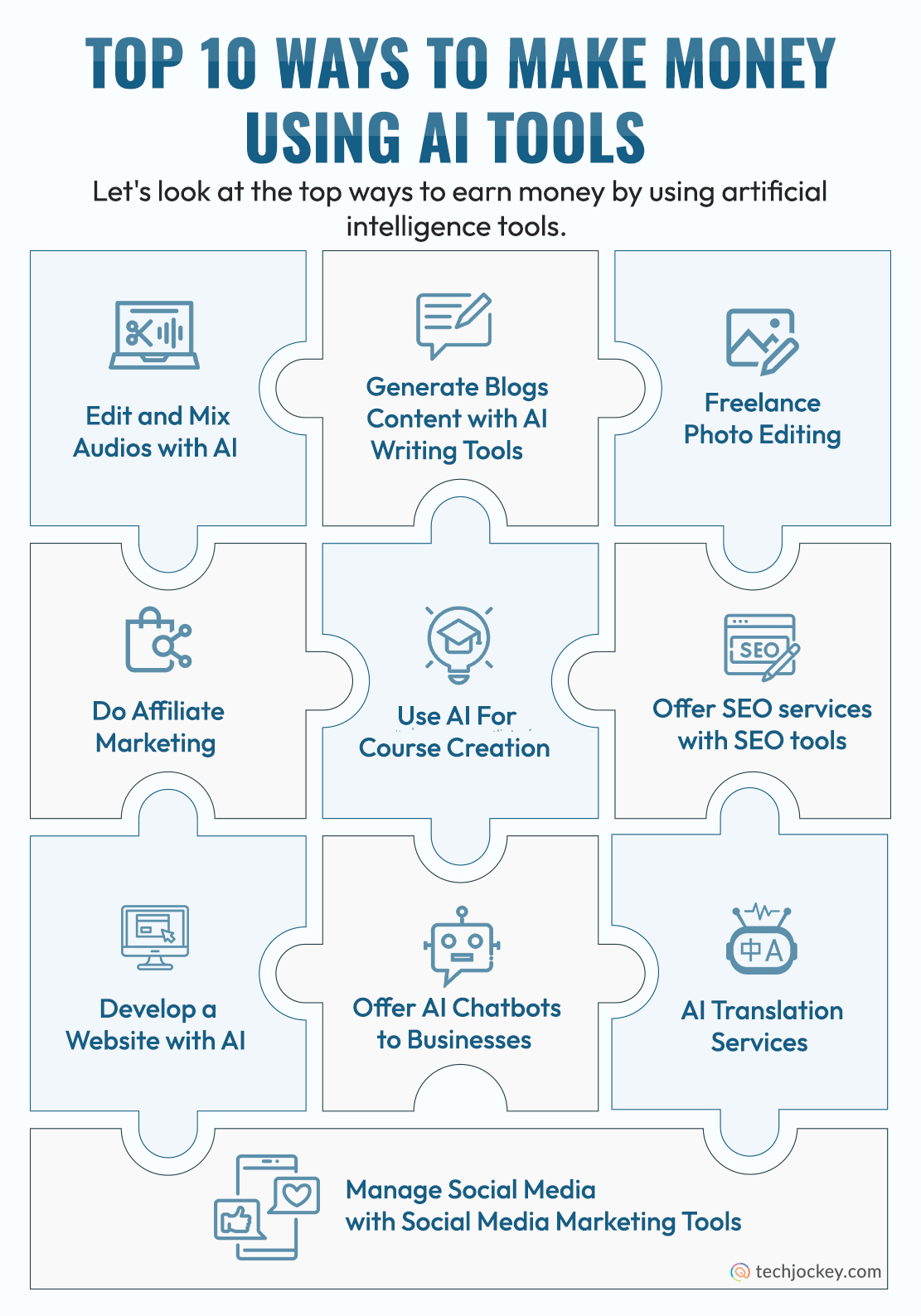
3. Creating and Selling Specialized AI Prompts
If you have mastered the art of talking to AI, you have a product to sell. A “Prompt Marketplace” has emerged where creators sell highly specific, tested prompts that solve complex problems.
Target Niche: Don’t just sell “general writing prompts.” Sell “medical research summary prompts,” “technical documentation formatting prompts,” or “E-commerce product description prompts.”
Scalability: Once you create a high-performing prompt library, you can package it into a digital product (an eBook or a Notion database) and sell it on platforms like Gumroad or Etsy. This is the definition of passive income.
4. AI-Enhanced Digital Marketing Services
Small businesses often struggle to maintain a consistent online presence. You can offer a “done-for-you” social media package powered by AI.
The Workflow: Use AI to generate an entire month’s worth of social media content calendars, captions, and hashtag strategies in a single afternoon, often informed by AI-driven market research.
The Value Add: By using AI to analyze competitor performance, you can provide your clients with data-backed insights that justify higher service fees.
Key Statistics: Marketing agencies that integrated AI workflows in 2026 reported a 40-60% increase in profit margins due to reduced labor costs and faster turnaround times.
5. Developing Micro-SaaS and Niche AI Tools
For those with a bit more technical ambition, you don’t need to be a coding genius to build software. No-code platforms combined with AI API integrations allow you to build simple tools that solve specific problems.
Examples: A tool that converts blog posts into email newsletters, or a tool that automatically generates LinkedIn posts based on a company’s whitepapers.
- Monetization: Implement a subscription-based model (SaaS). Even a small tool with 100 subscribers paying $10/month provides a recurring revenue stream that is highly attractive in today’s economy.
Strategic Tips for Long-Term Success
To thrive in the AI-driven economy, you must avoid the “commodity trap.” If you use AI to produce generic, low-effort content, you will eventually be outcompeted by the next person using a cheaper tool.
- Focus on Niche Expertise: AI is a generalist; you must be the specialist. Pair your AI tools with deep knowledge in a specific field like finance, law, or health.
- Maintain Ethical Standards: Always disclose when AI is used, and more importantly, always fact-check. AI hallucinations are real, and your reputation is your most valuable asset.
- Iterate and Optimize: Use A/B testing on your AI-generated content. If one headline performs better, feed that data back into your AI prompt to refine future outputs.
- Invest in Your Skill Stack: AI changes monthly. Dedicate at least two hours a week to testing new tools. The early adopters in 2026 are the ones who will define the industry standards of 2027.
Overcoming Common Challenges
Many beginners fail because they treat AI as a “get rich quick” button. Real success requires strategic thinking. You must learn how to edit AI output to match the specific “brand voice” of your clients, ensuring brand voice consistency across all platforms. If your content sounds like a robotic summary, it will fail to connect with human readers.
Furthermore, do not rely on a single platform. If you build your entire business on one AI tool, you are vulnerable to price hikes or policy changes. Diversify your toolset and focus on building a personal brand or a client base that values your unique perspective, not just the tool you use.
Conclusion: Your Roadmap to 2026 Success
The question is no longer “can AI help me make money?” but rather “how fast can I implement these systems to scale my income?” Whether you choose to freelance, build a faceless media brand, or create digital products, the technology is ready.
By combining the raw power of AI with your own creativity, critical thinking, and professional discipline, you can build a sustainable, high-income career in the digital era. Start small, focus on providing genuine value, and remember that AI is your assistant, not your replacement. The most successful entrepreneurs of 2026 will be those who embrace the synergy between human intuition and machine intelligence.
The tools are waiting. The market is growing. Now is the time to start building your AI-powered future.
While the initial steps involve leveraging AI for content generation and optimization, true long-term success in the AI-powered content economy hinges on adopting advanced strategies that foster sustainability and scalability. One crucial approach is diversification of income streams. Relying solely on one monetization method, such as ad revenue from a blog, can be precarious. Instead, consider leveraging your AI-assisted content creation capabilities to explore multiple avenues. This might include creating and selling AI-generated digital products like highly niched eBooks, comprehensive online courses, or customizable content templates. For instance, an AI-powered writer could produce a series of short, targeted guides on niche topics, format them into eBooks, and sell them on platforms like Gumroad or Etsy. This emphasis on digital product creation expands earning potential significantly. Another powerful strategy involves offering AI-content services directly to businesses. Many small to medium-sized enterprises (SMEs) lack the in-house expertise or budget for full-time content teams but desperately need high-quality, consistent content. You can position yourself as an AI-powered content agency, offering services ranging from blog post generation and social media management to email marketing copy and even scriptwriting for explainer videos. The efficiency gained from AI allows you to take on more clients and deliver faster turnaround times, significantly boosting your earning potential.
Furthermore, niche specialization and authority building become significantly accelerated with AI. By focusing on a specific, underserved niche, you can use AI tools to quickly research, synthesize, and produce expert-level content that establishes you as a thought leader. Imagine becoming the go-to source for “AI-driven marketing strategies for local florists” or “sustainable farming techniques using predictive AI.” AI can help you analyze vast amounts of data, identify emerging trends, and generate content that addresses precise pain points within that niche, attracting a highly engaged audience. This targeted approach not only fosters deeper audience loyalty but also opens doors for premium consulting or specialized product offerings.
Another game-changer is leveraging AI for content repurposing and distribution at scale. A single piece of long-form content, like a detailed blog post, can be transformed by AI into a multitude of formats suitable for different platforms. AI can automatically extract key takeaways for Twitter threads, summarize sections for LinkedIn posts, generate compelling captions for Instagram images, outline video scripts for YouTube, and even draft personalized email newsletters. This multi-channel distribution strategy dramatically amplifies your reach without requiring proportional increases in manual effort. Statistics show that businesses actively repurposing content can see up to a 40% increase in organic traffic and a 30% boost in lead generation simply by maximizing the value of existing assets. This systematic approach ensures your message reaches a wider, more diverse audience, maximizing every piece of content you create.
The Evolving Landscape and Ethical Imperatives
As the AI landscape continues its rapid evolution, staying informed and adaptable is paramount. What works today might be superseded by a more advanced model or tool tomorrow. Continuous learning, experimenting with new AI platforms, and understanding the nuances of different generative AI capabilities (e.g., text-to-image, text-to-video, multimodal AI) will be critical to maintaining a competitive edge. The shift from early-stage language models to highly sophisticated, context-aware AI like GPT-4 and beyond underscores the need for ongoing professional development, particularly in creating highly engaging and personalized content. Those who embrace continuous learning will be best positioned to harness the next wave of AI innovations.
However, with great power comes great responsibility. The widespread adoption of AI in content creation also brings ethical considerations and the imperative for transparency. It is crucial to disclose when AI has been used in the creation of content, especially if it’s factual or investigative in nature. Transparency builds trust with your audience. Moreover, content creators must remain vigilant against the potential for AI to generate misinformation or perpetuate biases present in its training data. Human oversight, fact-checking, and critical evaluation of AI outputs are non-negotiable. Ensuring factual accuracy and upholding intellectual property rights (both your own and others’) are fundamental ethical duties in this new era. A recent survey by Edelman found that 76% of consumers believe it’s important for companies to be transparent about their use of AI, highlighting the growing public expectation for ethical AI practices.
Ultimately, while AI provides unprecedented capabilities, the human touch remains paramount. AI is a powerful assistant, capable of handling repetitive tasks, generating drafts, and optimizing for search engines, but it lacks genuine creativity, empathy, critical thinking, and the unique human perspective that truly resonates with an audience. The most compelling stories, the most insightful analyses, and the most engaging content will always be those infused with human intuition, emotion, and originality. Your unique voice, your experiences, and your ability to connect on a human level are irreplaceable assets that AI cannot replicate. Embrace AI to enhance your productivity and reach, but never at the expense of your authentic voice and the genuine value you bring to your audience.
Conclusion: Charting Your Course in the AI-Powered Future
The confluence of human ingenuity and artificial intelligence is not just a trend; it’s the foundational shift of the modern digital economy. By strategically integrating AI tools into your content creation workflow, diversifying your monetization strategies, specializing in high-demand niches, and continuously adapting to new technological advancements, you are not merely participating in the future – you are actively shaping it. Remember that the true power lies in the synergy: AI handles the heavy lifting, freeing you to focus on the strategic thinking, creative direction, and empathetic connection that only a human can provide. The opportunities are vast, the technology is accessible, and the demand for quality content is insatiable. Step forward, innovate responsibly, and carve out your prosperous niche in this exciting new era of AI-powered content creation.