
In the rapidly evolving landscape of 2026, building a brand is no longer a task reserved for massive corporations with million-dollar budgets. With the democratization of artificial intelligence, solopreneurs and small business owners can now craft professional, consistent, and high-impact brand identities in a fraction of the time, making cost-effective branding a reality. If you are a beginner looking to enter the market, understanding how to use ai tools for small business branding is your greatest competitive advantage.
Using AI for branding isn’t just about generating a quick logo; it’s about creating a cohesive brand strategy, refining your brand voice, and automating your visual identity across multiple channels. This guide will walk you through the essential steps for how to use ai tools for branding beginners to navigate the entire brand development process and craft compelling brand messaging that resonates with your audience.
1. Defining Your Brand Identity Using AI Strategy Tools: A Guide for How to Use AI Tools for Branding Beginners
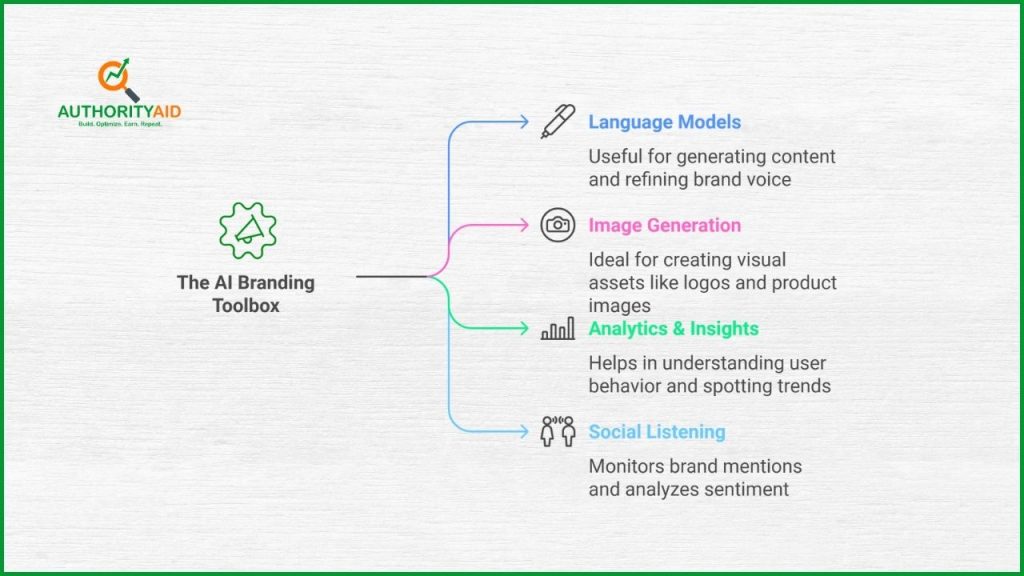
Before you dive into design, you must define the “soul” of your brand. Branding beginners often struggle with articulating their mission, vision, core values, and unique brand positioning, which is why understanding how to use ai tools for branding beginners for strategy is so crucial. In 2026, AI language models have become sophisticated enough to act as your own fractional brand strategist.
Using AI for Market Research
Start by feeding your business concept into advanced AI models. Ask the AI to perform a competitor analysis or to assist with target audience identification and identify gaps in your target market. By inputting your ideas, you can receive detailed reports on consumer pain points, enabling you to position your brand as the ultimate solution.
Crafting Your Brand Voice
Consistency is the cornerstone of effective branding. For those learning how to use ai tools for branding beginners, establishing a consistent brand voice is a key early win. AI can help you document your brand guidelines. Ask your AI tool to generate a “Brand Voice Document” based on your target demographic. Whether you want your brand to sound professional, witty, or empathetic, AI can provide a style guide that ensures every social media post, email, and blog post feels like it came from the same source.
2. Building a Visual Identity: Logos, Palettes, and Typography – Essential Steps for How to Use AI Tools for Branding Beginners
Visuals are the first thing your customers notice. Traditionally, hiring a branding agency to design a logo and visual identity would cost thousands of dollars. Today, AI-powered design tools allow you to generate professional-grade assets in minutes. This section will detail how to use ai tools for branding beginners to create stunning visual identities without breaking the bank.
AI-Driven Logo Generation
Tools like Midjourney, DALL-E 3, and specialized branding platforms allow you to iterate on logo concepts rapidly. Beginners should focus on simplicity and scalability. Understanding how to use ai tools for branding beginners in logo generation involves providing clear, specific prompts. When using these tools, provide specific prompts regarding your industry, color psychology, and aesthetic preferences (e.g., “minimalist logo for an eco-friendly skincare brand, earth tones, vector style”).
Establishing Consistent Color Palettes
Your color palette tells a story. AI tools can analyze your logo and suggest complementary color schemes that trigger specific psychological responses. Using these AI-generated palettes across your website, social media, and packaging ensures a unified brand identity that feels polished and professional.
3. Creating Content at Scale: Messaging and Copywriting – A Core Skill for How to Use AI Tools for Branding Beginners
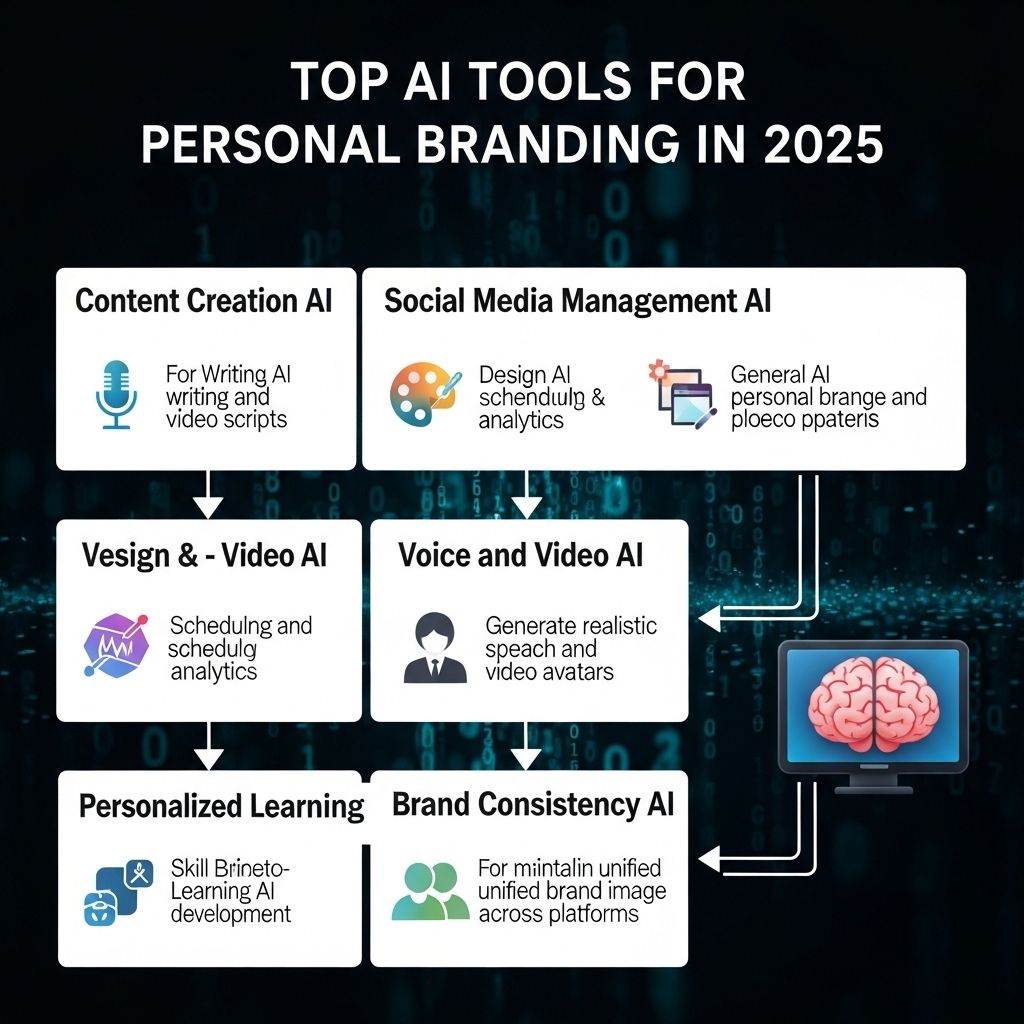
Once you have your visual identity, you need to communicate your message. Branding is a continuous conversation with your audience. AI excels at generating high-quality brand storytelling content, with AI content generators ensuring you never run out of ideas. This is a critical area for those learning how to use ai tools for branding beginners to maintain consistent communication and build brand awareness.
Automating Social Media Content
Consistency is where most beginners fail. AI copywriting tools and other AI platforms can now generate content calendars, caption ideas, and even short-form video scripts tailored to your specific brand voice, greatly assisting your overall digital marketing strategy. By automating the ideation process, you can focus your energy on engaging with your community rather than stressing over the “blank page” syndrome.
Personalizing Customer Interaction
In 2026, personalization is not an option—it’s a requirement. AI-driven CRM tools can help you segment your audience and tailor your messaging to their specific needs. By using AI to analyze customer behavior, you can ensure that your brand speaks directly to the individual, increasing customer loyalty and conversion rates significantly.
4. Assembling Your Reusable AI Branding Kit: A Practical Guide for How to Use AI Tools for Branding Beginners
Efficiency is the name of the game. A beginner’s mistake is using AI tools sporadically. This kit is essential for anyone learning how to use ai tools for branding beginners to ensure consistency and save time. To truly succeed, you need to build an AI branding kit—a centralized repository of your brand’s “DNA.”
What to Include in Your Kit:
The Brand Bible: A document containing your brand story, mission, vision, and tone of voice, generated by an AI.
Visual Assets: A folder containing your AI-generated logo variations, color hex codes, and typography files.
Prompt Library: Save the specific AI prompts that helped you generate your best content. This allows you to recreate your brand’s signature style whenever you need new assets.
Template Bank: Pre-designed templates for Instagram, LinkedIn, and email marketing that align with your visual identity.
By treating your AI tools as a long-term investment rather than a one-off solution, you can maintain brand integrity as your business grows.
5. Avoiding Common Pitfalls: The Human Touch When Learning How to Use AI Tools for Branding Beginners
While AI is incredibly powerful, it is not a replacement for human intuition, a key lesson for anyone learning how to use ai tools for branding beginners. As a beginner, it is crucial to understand the limitations of these tools.
The “Generic” Trap
AI models are trained on vast amounts of data, which means they often default to “average” or “generic” outputs. To make your brand stand out, you must inject human creativity. Use AI to do the heavy lifting, but always add your unique spin, personal stories, and human experience.
Ethical Considerations
Always check for copyright and trademark issues. While AI-generated images are evolving, ensure that your logo and visual assets are unique to your brand. Don’t rely solely on automated platforms; review every output to ensure it aligns with your ethical standards and legal requirements.
The Importance of Human Oversight
Never hit “publish” without a human eye. AI can occasionally hallucinate or generate content that feels robotic. Use AI as your creative assistant, not your creative director. You are the heartbeat of the brand; the AI is simply the engine that helps you move faster.
6. Future-Proofing Your Brand in 2026 and Beyond
The landscape of AI branding is shifting toward predictive branding. By 2027, we expect to see even more integration between AI tools and real-time consumer data. As a beginner, the best strategy is to remain agile.
Stay Updated: Follow tech leaders and AI branding experts to keep up with the latest tool updates.
Experiment Continuously: Don’t stick to one tool. Test new platforms as they emerge to see which ones offer the best workflow improvements for your specific niche.
Focus on Community: While AI helps you build the brand, your community helps you sustain* it. Use the time you save with AI to build genuine relationships with your audience.
Conclusion: Start Your Branding Journey Today
Using AI for branding is no longer a futuristic concept—it is the standard for modern entrepreneurs, especially for those learning how to use ai tools for small business branding beginners. By leveraging these tools to refine your strategy, design your visuals, and scale your content, you can achieve cost-effective branding and compete with established players, building a brand that truly reflects your vision.
Remember, the goal of using AI isn’t to remove the human element, but to amplify your reach and efficiency. Start small, experiment often, and keep your brand’s unique mission at the core of everything you create. The future of branding is here, and with the right tools, your potential is limitless.
Start by defining your brand values, generate your visual identity, and build your AI toolkit today. This comprehensive approach will guide you on how to use ai tools for branding beginners effectively. Your audience is waiting to hear your story—make sure your brand is loud, clear, and perfectly consistent.